
Khamenei is dead, but Iran’s constitution already has a secret succession plan that was built for exactly this moment
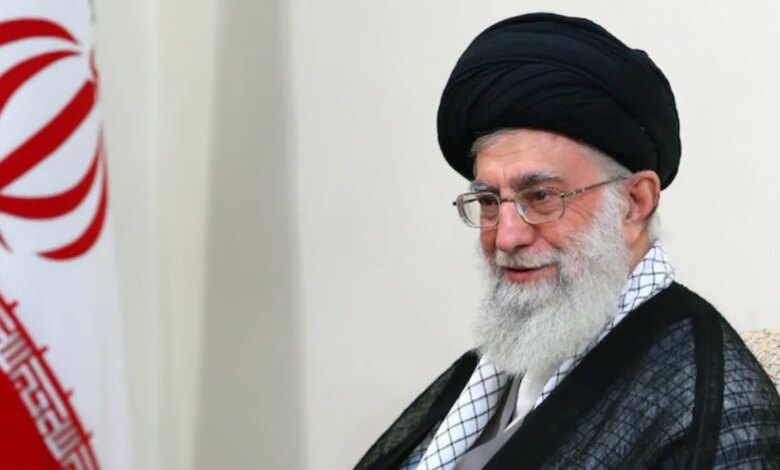
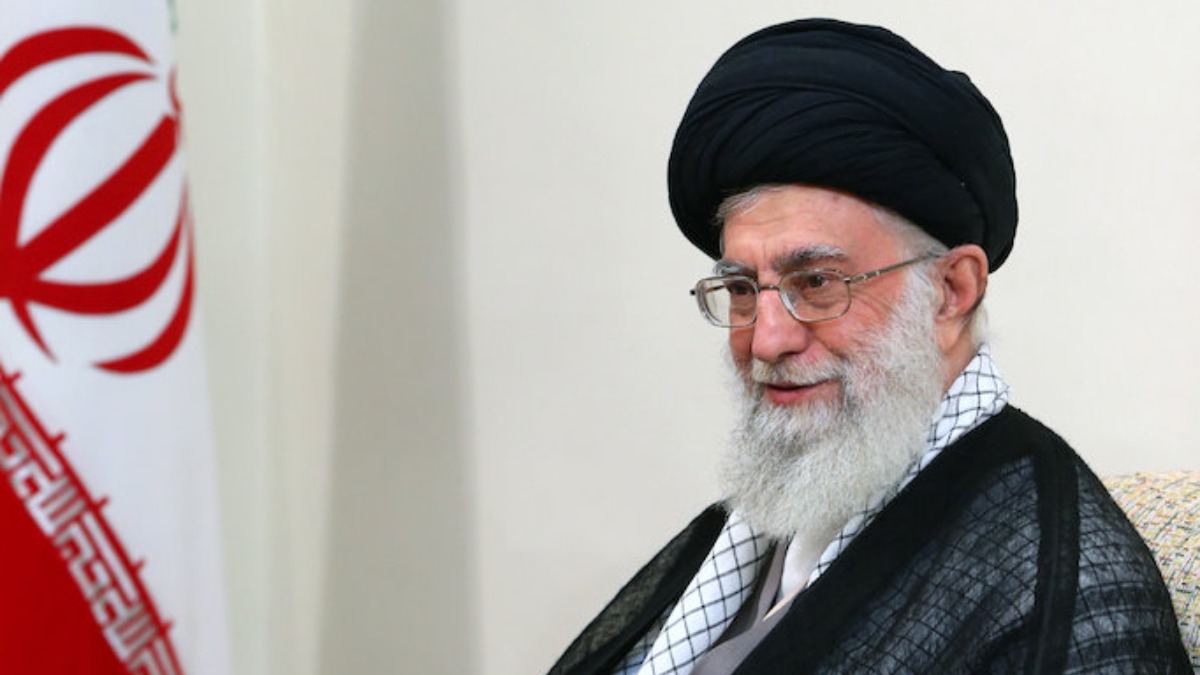
“File:Ali Khamenei receives Heinz Fischer in his house (6).jpg” by Official website of Ali Khamenei, CC BY 4.0.
The regime is still in charge.

|
Ayatollah Ali Khamenei, Iran’s Supreme Leader for three decades, has been killed in the initial wave of massive US and Israeli air strikes on Iran. President Donald Trump announced his death, and Iranian state television later confirmed it, marking a significant moment for the nation and the wider region.
With Khamenei’s death, Iran’s constitution immediately activates a temporary succession plan. A three-member council, made up of the president, the head of the judiciary, and a jurist from the Guardian Council chosen by the Expediency Discernment Council, is now managing the Supreme Leader’s duties. If any member of this group cannot serve, the Expediency Discernment Council appoints a replacement.
For a permanent successor, Article 111 of the constitution sets out a clear process. According to NBC News, the Assembly of Experts, an 88-member body of qualified clerics approved by voters, is responsible for choosing who leads next.
Iran’s political system is built to survive leadership transitions, even violent ones
Khamenei, 86, had one of the longest tenures of any national leader in the world and was only the second Supreme Leader since Iran’s 1979 Islamic Revolution. The role is extremely powerful, the Supreme Leader serves as head of state and commander-in-chief of the armed forces, including the elite Revolutionary Guards, with the ability to veto public policy and select candidates for public office.
Many young Iranians have never known life without him. His image appeared on billboards and in shops across the country, and state television covered his every move. While Iranian presidents often drew international attention, Khamenei always held the real power at home.
Before the strikes, Trump had given Iran a narrow window to negotiate a deal, though experts questioned whether Tehran fully understood what that ultimatum meant. Suzanne Maloney, a senior fellow for Middle East policy at the Brookings Institution’s Foreign Policy Program, believes Iran’s political system is resilient enough to survive outside pressure.
She stated that “Any mere change at the top of Iran’s leadership remains insufficient to topple the current system.” She added that while a political movement challenging the regime could develop over time, this leadership change is unlikely to bring meaningful reform to the regime itself. Reports had also revealed that Trump’s inner circle pushed for Israeli strikes first, a strategy many saw as deliberately designed to pull the US into a broader conflict with Iran.
Khamenei was born in Mashhad, northeastern Iran, in 1939, the second of eight children in a religious family. His father was a mid-ranking cleric in the Shia branch of Islam, the dominant sect in Iran. He often described his childhood as “poor but pious,” recalling times when he ate only “bread and raisins.”
His education was focused on the Quran, and he became a qualified cleric by age 11. His work was deeply political as well as spiritual, he became a vocal critic of the Shah of Iran, the monarch who was later overthrown by the Islamic Revolution. He endured six arrests by the Shah’s secret police, suffering torture and internal exile, and spent years living underground or in prison before eventually rising to the top of Iran’s political and religious order.
Source link




Published: Mar 1, 2026 10:15 am