
State officials completely abandon local health department during terrifying measles chaos, leaving a devastating trail of destruction
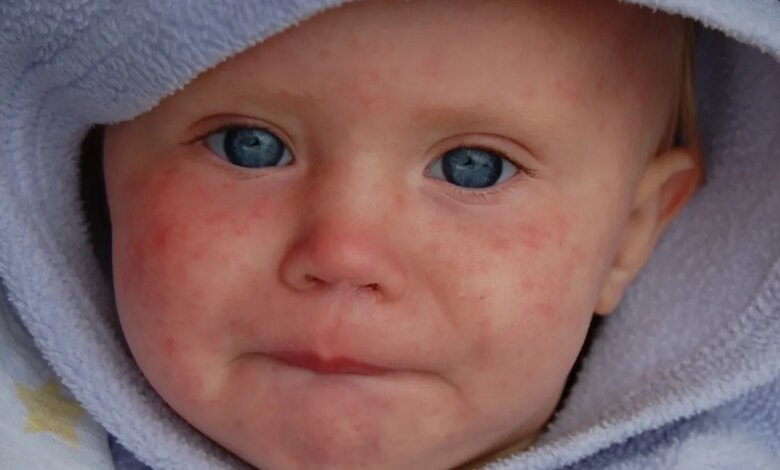

Photo by Dave Haygarth, licensed under CC BY 2.0
A complete breakdown of public health.

|
As measles outbreaks began to tear through West Texas in early 2025, Katherine Wells, who leads Lubbock’s public health department, found herself in a desperate scramble for funding, only to be repeatedly denied by state officials. This comes from a report by NBC News.
Wells needed more staff to handle the numerous exposures at local pediatricians’ offices, urgent care centers, restaurants, and day cares, even though the primary outbreak was an hour away in Gaines County. She was relying heavily on her salaried staff, working them for grueling 80-hour weeks, which she called “horrible.”
During emergency planning meetings with the Texas Department of State Health Services, Wells pleaded for about $100,000 to hire temporary workers. “I was like, can I just have money so that if I need a few hours of work from a retired school nurse who we’ve worked with before, I can just pay them?” Wells said. The answer, she explained, was always “no.” The state did send a few travel nurses, but no extra funding.
This funding struggle in Lubbock highlights a much larger and expensive problem facing the nation
To stop a measles outbreak from escalating, public health workers need to act fast, contacting every exposed person, determining their vaccination status or health risk, and then convincing them to get vaccinated or quarantine for three weeks. Wells had to pull at least half of her staff to respond to the outbreak, on top of their regular duties.
A new report from a prominent public health institution calculates that if measles vaccination rates continue to drop by just 1% annually for the next five years, the cost to the U.S. could skyrocket to $1.5 billion each year. Researchers used mathematical models and existing county-level vaccination data to predict increases in measles cases, hospitalizations, and their associated medical and societal costs.
Based on these projections, $41.1 million would be needed annually just to cover patients’ basic medical needs, including health insurance. A $947 million would go toward public health response efforts like surveillance and contact tracing. On top of that, lost productivity in the workforce could reach $510.4 million every year. Dr. Dave Chokshi, chair of Common Health Coalition, a nonprofit public health group that partnered on the project, explained that a measles outbreak impacts all parts of “the health ecosystem.”
He emphasized that the human consequences are crucial, but “we also wanted to make it clear that there are economic consequences, including employees absorbing lost work, public health departments that are stretched too thin to respond, and health care systems straining to shoulder the burden of emergency response.”
The U.S. declared measles eliminated in 2000, and since then, outbreaks have generally been contained quickly. However, backsliding vaccination rates are increasing the risk of massive eruptions and now threaten the nation’s measles elimination status. An investigation found that since 2019, more than two-thirds of counties have reported notable drops in vaccination rates. Among states that track MMR rates, over half their counties, 67%, fall below the level needed to stop a measles outbreak.
As President Donald Trump was taking his second oath of office in late January 2025, measles cases were beginning to spread in West Texas. Under his presidency, following the guidance of Health Secretary Robert F. Kennedy Jr., the administration has not strongly endorsed vaccines as a way to end such outbreaks.
Instead, the messaging on childhood vaccination has focused on “personal choice” rather than public health necessity. This approach seems to have consequences, as the first two months of 2026 saw over 1,000 confirmed measles cases, nearly half of the 2,281 cases reported in all of 2025. A shocking 94% of those infected were unvaccinated.
Source link




Published: Mar 2, 2026 02:00 pm