
Trump’s sudden scramble for weapons sends chilling signal, despite White House claims of endless supply
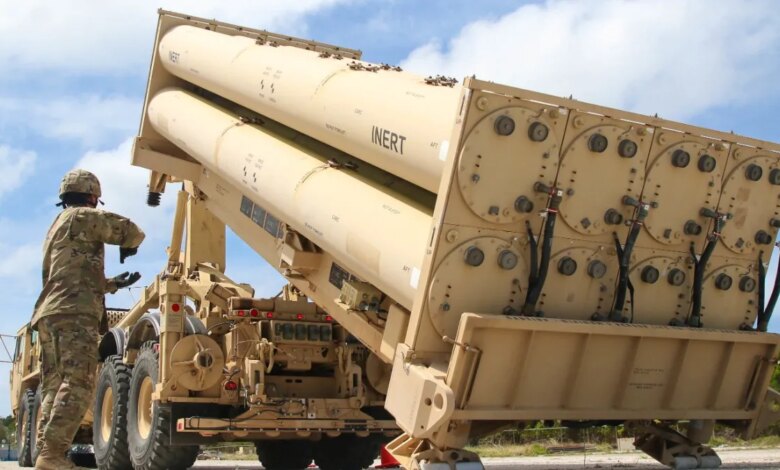

Image by The U.S. Army, CC BY 2.0.
‘We have enough, but we want more.’

|
President Donald Trump announced on Friday that defense industry executives have agreed to quadruple production of what he calls “exquisite class” weapons following a White House meeting. According to Fox News, this move comes as U.S. military operations, specifically Operation Epic Fury, continue to target Iranian military assets.
However, the White House was quick to clarify that this meeting wasn’t a snap decision driven by immediate battlefield needs. Officials explained that the session was scheduled weeks ago as part of a broader, ongoing effort to strengthen America’s defense industrial base and ramp up the production of domestically made weapons.
Trump himself took to Truth Social after the meeting, stating that the expansion of these weapon systems actually began three months prior, and that many plants and production lines are already up and running. He also boasted about having a “virtually unlimited supply” of medium and upper-medium grade munitions, which he noted are currently in use in Iran and were recently deployed in Venezuela.
A long-term strategic play or a reaction to a sudden crisis?
Despite this, he confirmed that orders for these levels have also been increased. The meeting concluded with executives agreeing to return to the White House in two months for a follow-up. Some of the biggest names in defense were in attendance, including Lockheed Martin, Northrop Grumman, RTX Corporation, Boeing, Honeywell, BAE Systems, and L3Harris Technologies.
Northrop Grumman publicly supported the president’s initiative, saying, “We support the President’s focus on speed and investment to deliver military capabilities. With our industry-leading levels of investment and decades of proven performance, we continue to grow production capacity and deliver mission-ready technologies for the nation’s warfighters.” It’s clear the industry is on board with this acceleration.
Despite the White House’s assurances, the sustained pace of missile defense operations has definitely drawn some scrutiny on Capitol Hill. During the 12-day Iran conflict in 2025, U.S. forces reportedly fired more than 150 Terminal High Altitude Area Defense (THAAD) interceptors, which is roughly a quarter of the global inventory, to protect Israel and U.S. assets from Iranian missile attacks.
Patriot PAC-3 MSE missiles, another critical defensive asset, are currently produced at a rate of only about 600 to 650 annually, with replenishment taking months or even years, not weeks. Defense planners view missile defense inventories as a delicate strategic balancing act.
The same high-end systems crucial for protecting U.S. bases and partners in the Middle East are also being supplied to Ukraine and positioned in the Indo-Pacific. This creates what some analysts call a “zero-sum” competition for inventory across different theaters, which is a tough spot to be in.
Lawmakers who’ve received classified briefings have voiced concerns about the sustainability of these operations if they expand further. Senator Mark Kelly, for example, warned that the campaign could quickly become a “math problem,” pitting the volume of incoming missiles against a finite supply of interceptors and limited production capacity. Other members, including Republicans, have been assured by officials that U.S. forces remain in strong shape.
Current and former defense officials have also highlighted an important distinction: offensive strike weapons can often be surged from prepositioned stocks, but defensive interceptors like Patriot and THAAD systems have much longer production timelines and simply can’t be rapidly manufactured at scale. It’s a crucial difference when considering the long-term implications of ongoing conflicts.





Published: Mar 6, 2026 07:00 pm