
Trump wants Iranian Kurds to lead his ground war, but the fighters he’s calling on remember exactly what happened the last time they helped the US
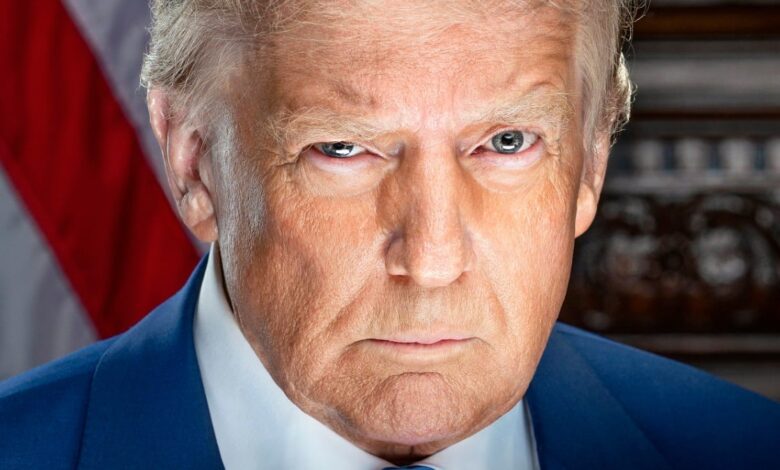
“January 2025 Official Presidential Portrait of Donald J. Trump” by Daniel Torok, Public domain. Via Wikimedia Commons.
They have a big decision to make,

|
President Trump has called on Iranian Kurdish opposition groups to lead a ground war against Iran, during ongoing US-Israeli strikes on the country. But these Kurdish groups are hesitant, weighing the risks carefully and remembering past betrayals by the United States.
According to Al Jazeera, of all ethnic groups in Iran, the Kurds are among the most organised and militarily experienced. They have built political networks, fought against government forces, and gained combat experience alongside other Kurdish movements. On February 22, several groups came together to form the Coalition of Political Forces of Iranian Kurdistan, making them one of the few organised armed challenges to the Islamic Republic.
Trump said he would be “all for it” if Iranian Kurdish forces led a ground operation. Reports suggest US officials have contacted leaders in the Kurdish region of northern Iraq, where many of these groups are based, to discuss the possibility. But Iranian ground forces number around half a million, while Kurdish groups could likely muster only about 10,000 fighters, meaning they would be heavily dependent on US or Israeli air strikes and weapons supplies.
The Kurds have strong reasons to be cautious about trusting US promises again
The biggest problem is the Kurds’ painful history with US support. In 1991, President George H.W. Bush urged Kurds to rise against Saddam Hussein, but the rebellion went unsupported, leading to tens of thousands of deaths and years of displacement.
More recently, Syrian Kurds were key US partners in the fight against ISIL, but US support weakened after the 2017 Kurdish independence referendum, and again in 2019 when partial US withdrawals from northern Syria left Kurdish forces exposed to Turkish offensives.
The risks are also very immediate. Tehran has already warned of widespread reprisals if the Kurds act. Many Iranian Kurdish armed groups are based in northern Iraq’s Kurdish region, a semi-autonomous area governed by the KRG, home to five million people. Questions remain about how far Trump will actually back a Kurdish offensive, and any move by these groups could bring serious consequences for that region.
Iran has already launched missile and drone strikes targeting groups like the Democratic Party of Iranian Kurdistan. A member of Iran’s Defence Council has even threatened widespread attacks on the KRG if its authorities don’t crack down on what Iran calls US and Israeli-backed rebel groups. The KRG has consistently said it does not want to be part of a war with Iran.
There is also deep distrust among some Kurdish factions due to ideological differences, particularly among leftist Kurdish groups who are uncomfortable partnering with the US and Israel. This adds another layer of hesitation on top of the historical grievances. Meanwhile, in Washington, two Republican lawmakers broke with their party on Iran war powers, signalling that not everyone in Congress is aligned on the issue.
Yet some analysts believe this could be a rare opportunity. The conflict following the October 2023 Hamas-led attack on Israel, the war on Gaza, and the 12-day war of June 2025 have weakened Iran’s regional alliances. Combined with the current strikes and large internal protests in January, the Islamic Republic may be more vulnerable than it has ever been, and some suggest that action could come within days.



Published: Mar 7, 2026 12:15 pm