
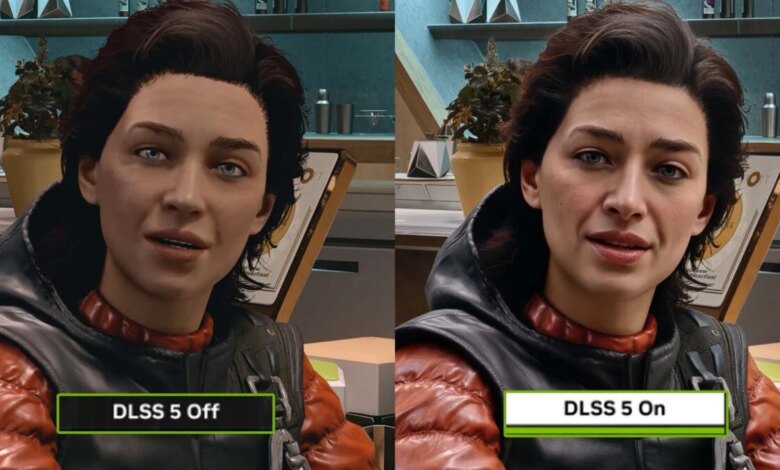

Yesterday, Nvidia unveiled DLSS 5: an “AI-powered breakthrough” in visual upscaling tech that, to put it lightly, looks like garbage. The internet’s reaction to the tech has been less than favourable, which is probably why Bethesda and Nvidia are in full damage control mode, with the former attempting to downplay the tech as “totally optional” and under their “artists’ control.”
Bethesda’s 2023 action RPG Starfield was one of the key stars of Nvidia and Digital Foundry’s DLSS 5 tech demonstration, alongside the yassified versions of Resident Evil Requiem’s Grace and Leon. That probably explains why the Bethesda Game Studios X account thought it necessary to weigh in on the negative response to Digital Foundry’s tweet, especially considering that Nvidia published a clip of Todd Howard (assumedly at gunpoint) raving about how he thinks DLSS 5 is “amazing.”
“Appreciate your excitement and analysis of the new DLSS 5 lighting here,” reads Bethesda Game Studios’ reply. “This is a very early look, and our art teams will be further adjusting the lighting and final effect to look the way we think works best for each game. This will all be under our artists’ control, and totally optional for players.”
And thus, the internet was quelled, and everyone thanked the poor social media intern who was forced to post this reply. Just kidding, obviously; it only exacerbated the situation. “Nah, fuck your excitement and fuck this slop,” reads one reply. “You know another way to improve the look of your games? Actually letting your artist and developers do their job and not an AI,” reads another.
Bethesda isn’t the only one trying to squash the pushback, however, as Nvidia’s reply on the official DLSS 5 announcement video on YouTube echoes Bethesda’s statement, also making a point of noting that game developers have “artistic control” over how they implement DLSS 5. “Important to note with this technology advance – game developers have full, detailed artistic control over DLSS 5’s effects to ensure they maintain their game’s unique aesthetic. The SDK includes things like intensity, color grading and masking off places where the effect shouldn’t be applied. It’s not a filter – DLSS 5 inputs the game’s color and motion vectors for each frame into the model, anchoring the output in the source 3D content.”
Capcom has yet to reply to the ongoing debacle, but considering Resident Evil Requiem director Koshi Nakanishi was criticised for showing off some images that looked suspiciously AI-generated during the DLC announcement video last week, you gotta wonder if they even care at this point. Actually, now that I think about it, that “Forbidden Requiem” image he holds up at about the one-minute mark does look like it was run through a DLSS 5 filter…
Source link