
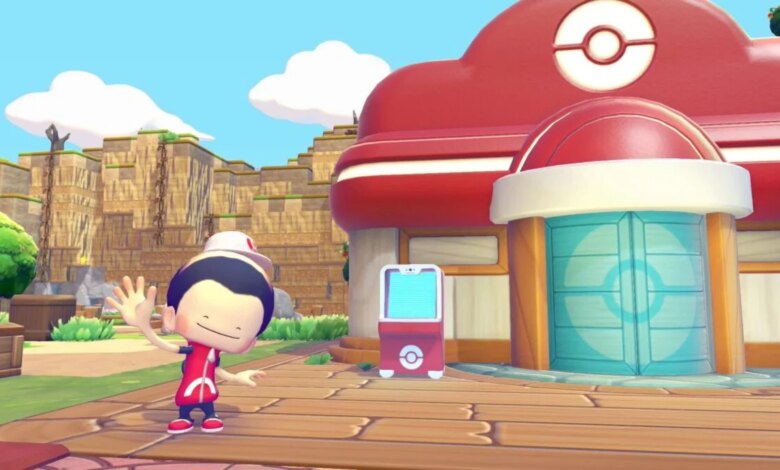
I’m still only a few hours into Pokémon Pokopia, and more than once I’ve felt my stomach drop at the sheer magnitude of things to do and see in the Animal Crossing-style life sim. My island still looks like a mess compared to the entire functioning towns other players have made for the Pokémon staying in their terraformed homes. And I still haven’t found My Boy (any form of Pichu, Pikachu, or Raichu) to bring back to my town to live with me. Everything about this game should overwhelm me just as Animal Crossing, Stardew Valley, and Minecraft have in the past. Yet still, I’m itching to boot up my Switch 2 to get back to it even as I write this because Pokopia has given me something to latch onto beyond a terrifying amount of freedom.
Pokopia’s magnetism could easily be chalked up purely to my undying love for the electric rat, but structurally it manages to keep me hooked in ways the cozy management genre usually doesn’t. Its overarching mystery of a seemingly post-apocalyptic Kanto region in which humanity has disappeared is the sort of gripping, dark, almost visual novel-esque premise Pokémon fans haven’t gotten before. It makes me willing to build a house in hopes that I’ll find extra lore drops everywhere, even in the art that’s hanging on the walls.

Developer Omega Force mixes the freedom of the city builder with a structured, mission-based story progression that keeps me compelled when just managing a town of needy little guys would have lost me hours ago. I’m trying to stay focused on specific goals rather than looking too hard at my surroundings and imagining the blueprint of a larger city and all the work that would entail. Maybe that will come down the line when I’ve solved the mystery, but until then, finding out what happened to one of my favorite worlds in video games is my top priority, and a really rewarding one.
Thankfully. Pokopia’s management systems are some of the most intuitive and simple I’ve played with, so doing those main story quests is straightforward enough and even the most tedious chores feel like a breeze to accomplish. For all the comparisons the game got to Animal Crossing, there are so many little quality-of-life choices in Pokopia that remove needless friction and annoyance. Moving through and molding the world is incredibly simple. It’s made better by the Switch 2’s mouse controls which turn the clunky micromanaging of minute details and item placements into an easy point-and-click process. I can be suffocated by the barrage of new things to do, see, buy, and build, but once I get past the decision paralysis, Pokopia does everything in its power to make sure the mechanics behind those systems are clear and easy to execute, and the effects of my actions on the world are immediately apparent.

Over the years, I’ve found that the easiest way to get me into a video game genre I don’t usually play is to set it in a world I can care about. If a life sim is set in a place worth living in, I’ll power through my usual anxieties about the unstructured, make-your-own-fun genre and its freeform sandbox to find something to care about. In Pokopia, things I care about are all around me, and I don’t feel like I’m being left rudderless and without guidance on how to find them. Maybe by the time I’ve uncovered what happened to humanity, I’ll be so attuned to Pokopia’s building blocks that I’ll create an elaborate town like the ones I’m seeing from seasoned genre veterans. My favorite Pokémon are out there, and I want them to have a damn fine home when they show up.
Source link